

What does a typical day at a Montessori nursery look like?
By the team at Dawmouse Montessori — a Fulham Montessori nursery that has cared for local families since 1975.Last updated 16 Sep 2026 A typ...
Read the tip →Authentic Montessori is not a style of decoration or a box of wooden toys — it is a carefully thought-out way of understanding how young children actually learn.
More than a century ago, Dr Maria Montessori made a simple but revolutionary observation: that children are not empty vessels waiting to be filled with facts, but active, capable learners who absorb the world most deeply when they are free to explore it with their hands.
Everything we do at Dawmouse flows from that insight, and it is why a morning here looks so different from a conventional classroom.
Rather than moving a whole group through the same lesson at the same moment, our practitioners observe each child closely and offer them exactly the activity that meets where they are — ready to stretch them a little, never to overwhelm them.
A child who is fascinated by pouring and scooping is given the chance to perfect it; a child reaching towards letters and sounds is gently guided onward.
Because the work is chosen to fit the child rather than the other way around, learning here feels less like instruction and more like discovery.
Our rooms are calm, ordered and beautiful, with everything set at child height and arranged so that a two-year-old can choose an activity, carry it to a table, complete it and return it entirely by themselves.
That sense of order is not about tidiness for its own sake; it is what gives young children the security and independence to concentrate deeply, and to feel genuinely capable in a world that is usually built for grown-ups.
Pouring, buttoning, sweeping and caring for the room — the everyday tasks that build coordination, concentration and a real sense of independence.
Beautiful materials that help children refine their senses and begin to classify and make sense of the world around them.
A rich, unhurried journey into sounds, words and early reading and writing, built on conversation and story.
Concrete, hands-on materials that let children feel quantity and pattern long before they meet numbers on a page.
Geography, nature, music and art that open children's eyes to the richness and variety of the world they belong to.
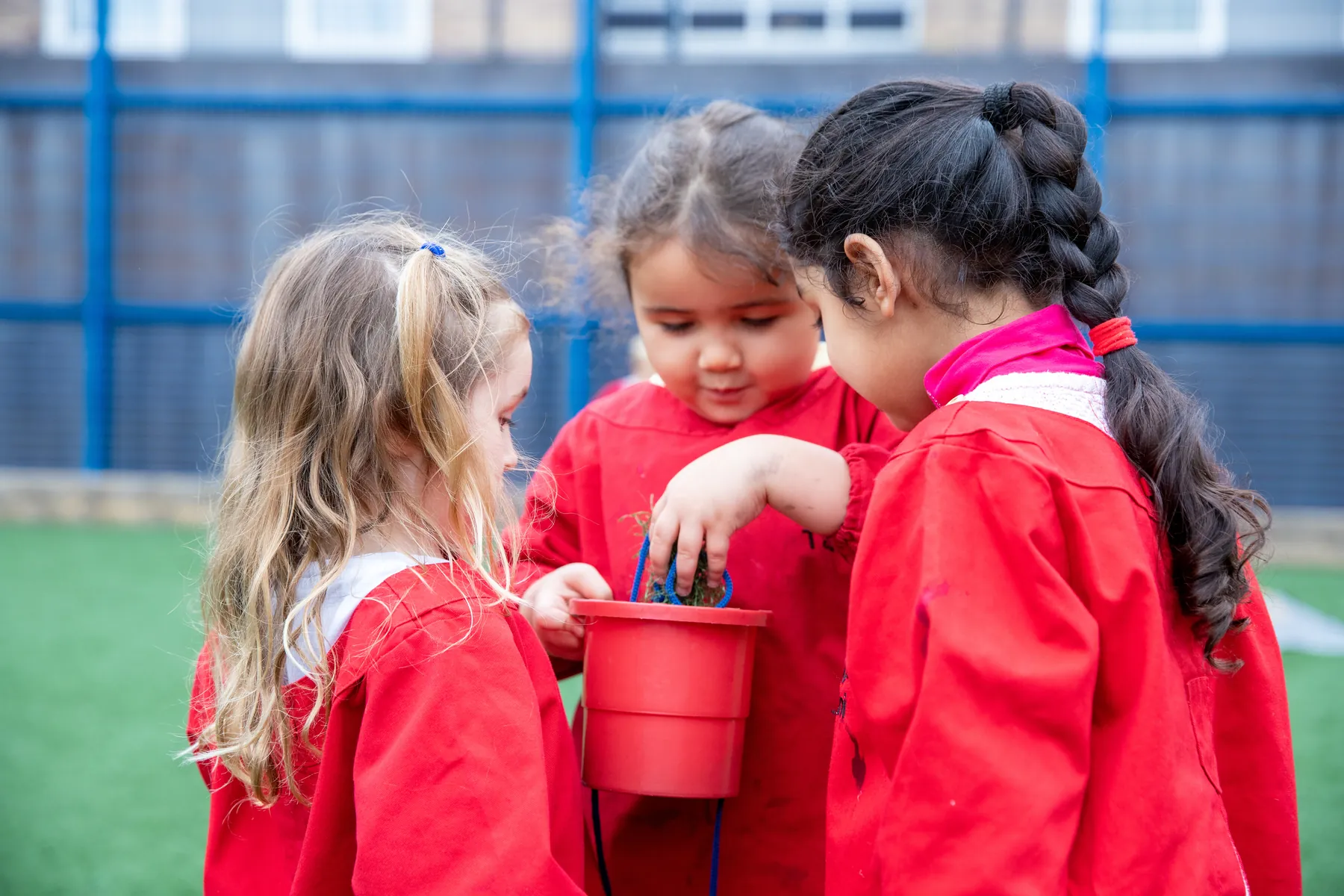
Daily time to run, balance, climb and play together on our outdoor space, developing strong, confident bodies.
One of the quiet joys of a Montessori setting is the way children of different ages learn side by side.
Younger children look up to the older ones and are drawn onward by their example, while older children consolidate their own understanding by helping and guiding the little ones — growing in patience, kindness and confidence as they do.
It is a small community in the truest sense, and it prepares children beautifully for the give and take of school and life beyond.
From the blog
By the team at Dawmouse Montessori — a Fulham Montessori nursery that has cared for local families since 1975.Last updated 16 Sep 2026 A typ...
Read the tip →
By the team at Dawmouse Montessori — a Fulham Montessori nursery that has cared for local families since 1975.Last updated 16 Sep 2026 A Mon...
Read the tip →
By the team at Dawmouse Montessori – a Fulham Montessori nursery that has cared for local families since 1975.Last updated 16 Sep 2026...
Read the tip →Frequently asked questions
No — children do not need to be potty trained before they start with us. We have a nappy changing station, and when the time is right we will support you and your child through potty training, sharing what we have learned over the years with any family who would like the help.
Play is how young children learn, but there is far more to a Montessori day than simply playing. The children are free to explore and choose activities that interest them, and though the materials can look like toys they are purposeful activities across practical life, mathematics, language and the senses, arranged on the shelves from simpler to more challenging so each child builds skills and independence at their own pace.
Reading, writing and number recognition come when a child is ready, and pushing them too early tends to discourage rather than help. From the moment a child joins us the environment is quietly preparing them: activities are laid out left to right in readiness for reading and writing, sensorial work strengthens the muscles used for writing, and sorting and matching introduce early mathematics and problem-solving without a worksheet in sight.
We do not like to force children, but we know some go on to schools that assess for entry, so we help them get ready — recognising letters and numbers in the environment, mark-making and tracing, and plenty of open-ended conversation, all underpinned by the grace and courtesy that serves a child anywhere. Over the years our children have gone on to many local schools, and we are always happy to talk through which ones might suit yours.
Behaviour is usually a young child's way of expressing a feeling or a need, so we start by getting to know each child as an individual, and when someone is finding things hard we listen, talk with their parents, and give them a little space to reflect on their choices. We often use books such as The Colour Monster to help a child name what they are feeling and then work out why, which builds the self-awareness that heads off a good deal of the difficulty in the first place.
Almost never. Young children often simply don't remember, or don't fancy recounting their morning, so we hold a circle time after lunch to talk through what everyone has done. We also share weekly updates through the My Montessori Child app, showing what your child has worked on and how they are progressing, and we try to send a note of the next day's planned activities so you have a gentle steer for the conversation at home.
Yes, weather permitting. We are fortunate to have a large outdoor playground, and we aim for at least half an hour outside each day — often more on fine days, when we can bring the classroom outdoors altogether. On the wettest days it might be only a few minutes of fresh air before we move to our indoor gymnasium, but getting outside every day matters to us.
Because we encourage the children to do things for themselves, dressing included. It is not always perfect and it can take a while at first, but giving a child the time and space to manage their own coat and shoes is how the skill — and the confidence that comes with it — takes root, and the little mix-ups sort themselves out as they practise.